
A Simple Tool with a Powerful Impact on Person-Centered Care
Location History is one of the ePAUL functionalities that can make a meaningful difference for both resident experience and caregiver workflows.
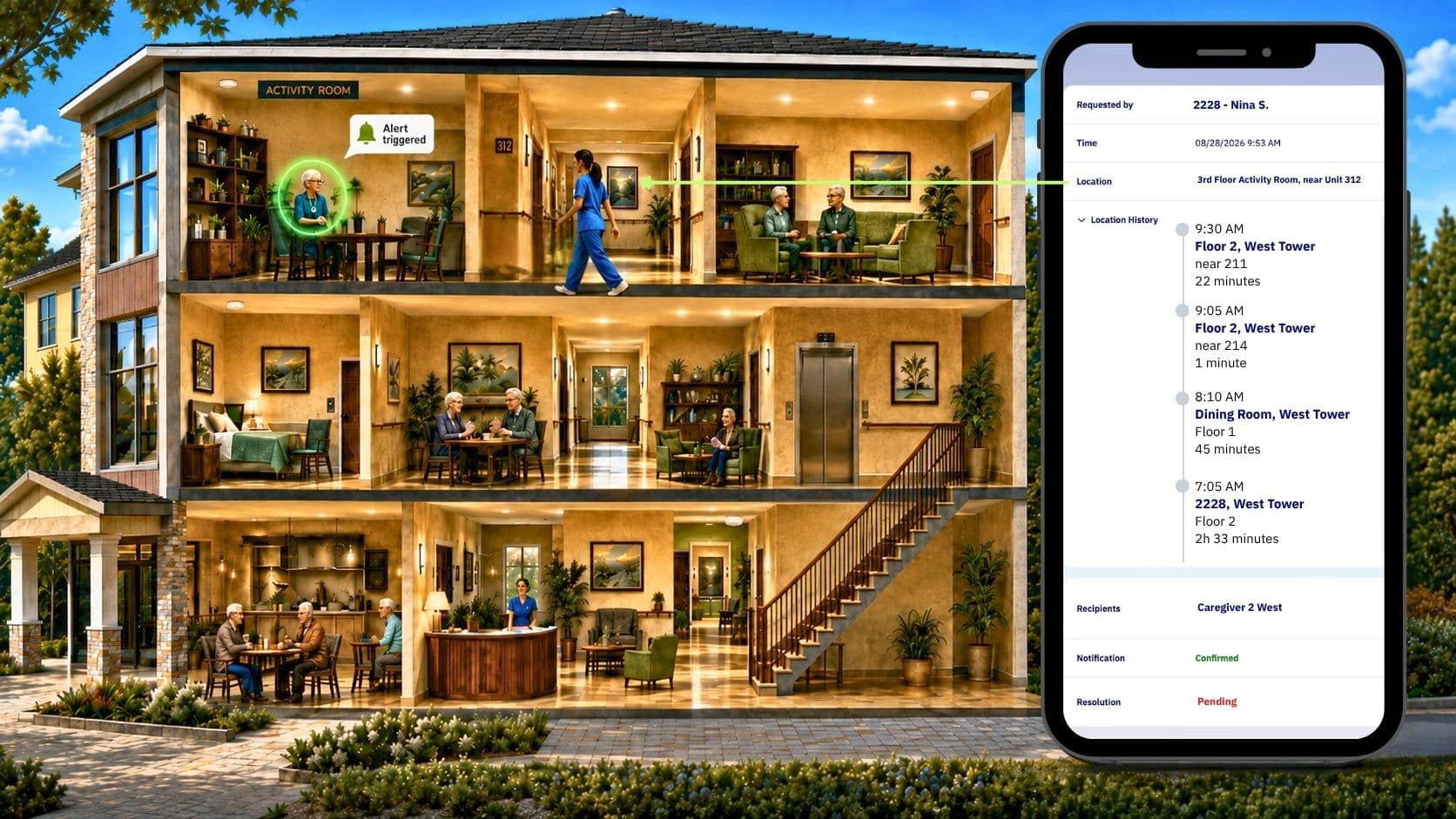
ePAUL is Helpany’s resident-worn emergency call device, available as either a bracelet or pendant. Residents can press the device to request assistance when needed. ePAUL communicates with PAUL devices installed throughout the community. PAUL is Helpany’s privacy-preserving, radar-based sensor that helps recognize resident movement and activity without using cameras or microphones. Together, ePAUL and PAUL can provide care teams with location information that helps them determine where a resident may be when support is needed.
This becomes especially valuable when a resident presses their ePAUL for assistance.
With a traditional emergency call system, a caregiver may receive the resident’s name and apartment number, but the resident may not actually be in their apartment. The caregiver may then need to begin searching—checking the dining room, activity areas, a friend’s apartment, the fitness center, or other places the resident frequently visits.
With ePAUL, caregivers can use location information to help identify the resident’s location within the community and respond more directly. In an emergency, reducing the time spent searching can make an important difference. From an operational perspective, it can also help caregivers use their time more effectively and focus more of that time on responding to residents.
Location History can also support everyday care.
For example, a caregiver may need to provide a resident with scheduled medication, but the resident is not in their apartment. Instead of asking the resident to remain in their apartment waiting or requiring the caregiver to search throughout the community, the caregiver can review the resident’s Location History in the app or dashboard to help determine where the resident has recently been and where they may be.
This is where technology can meaningfully support person-centered care.
Residents should not have to organize their day around the care system. Instead, care teams should have the information and tools they need to bring support to residents within the natural flow of their daily lives.
Residents can attend activities, visit friends, enjoy a meal, or spend time in another area of the community without needing to remain in their apartment simply because care or assistance may be needed. Caregivers have an additional tool to help connect with and support them when the need arises.
Location History can therefore support two important goals at the same time: helping caregivers work more efficiently while giving residents greater freedom to live their day on their own terms.
That is an important part of person-centered care: adapting care around the resident rather than asking the resident to adapt their life around care.